


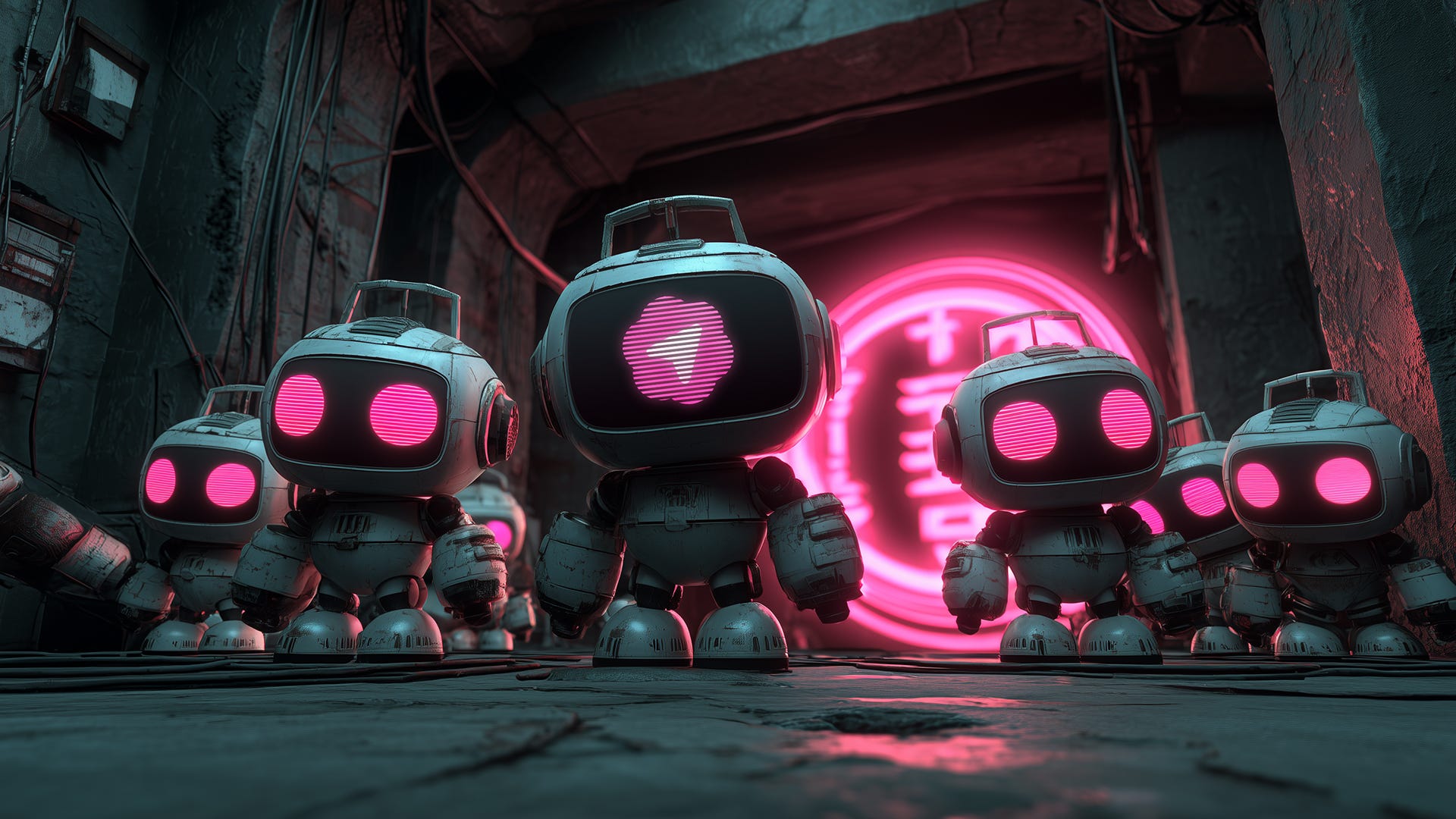
Like many people, I tried OpenAI’s ChatGPT Atlas browser recently. I immediately made it my daily driver, seeing if I could make the best of it. Tl;dr: it’s still early days and I don’t believe it’s quite ready for primetime. But let’s back up a bit.
The Era of the AI Browser Is Here
Back in July, I reviewed both Comet from Perplexity and Dia from The Browser Company. It was a glimpse of the future that I wanted. I concluded:
The AI-powered ideas in both Dia and Comet are a step change. But the basics also have to be there, and in my opinion, should be better than what Chrome offers. The interface innovations that made Arc special shouldn’t be sacrificed for AI features. Arc is/was the perfect foundation. Integrate an AI assistant that can be personalized to care about the same things you do so its summaries are relevant. The assistant can be agentic and perform tasks for you in the background while you focus on more important things. In other words, put Arc, Dia, and Comet in a blender and that could be the perfect browser of the future.
There were also open rumors that OpenAI was working on a browser of their own, so the launch of Atlas was inevitable.
Browser War 2.0
For anyone who lived through the early days of the web, there was the so-called Browser War, a fierce competition between Netscape and Microsoft Internet Explorer. A favorite pastime of the tech industry at the time was tracking the dwindling market share of Netscape as Microsoft (illegally) bundled IE with Windows and brute-forced its way to dominance. Google would launch Chrome in 2008 and it steadily climbed the charts until it overtook IE around 2012.
To be fair to Google, Chrome was (and still is) a good product. Unlike Internet Explorer, it was fast and uncluttered. Each tab ran in its own process, which meant if one site crashed or hung, it didn’t crash your entire browser. (Yes, that was a huge issue at the time.)
But in 2025, AI wants to bust out of the confines of its isolated tab and ride along as your sidekick as you go about your business on the internet. Context makes AI a better assistant.
So while Google slept on deeply integrating Gemini into Chrome and making it known, and Microsoft poorly marketed Copilot in Edge, upstarts like Dia and Comet came about. And now, Atlas.
Initial Impressions
The Atlas UI is minimal. Its homepage is essentially ChatGPT but the ask text field is an omnibox that can distinguish between URLs, search keywords, and questions.
Interestingly, when typing a search query like “whole foods,” Atlas will display search results first and answers second. The reverse of what Google search does these days where they’re prioritizing AI overviews over search results.
Highlighted Links

Beyond the Machine
I must admit I’ve tried to read this essay by Frank Chimero—a script from a talk he recently gave—for about a week. I tried to skim it. I tried to fit it into a spare five minutes here and there. But this piece demands active reading. Not because it’s dense. But because it is great.
Chimero reflects on AI and his—and our—relationship to it. How is it being marketed? How do we think about it? How should we use it?
First off, Chimero starts with his conclusion. He believes we should reframe AI to be less like a tool or technology, and more like a musical instrument.
Thinking of AI as an instrument recenters the focus on practice. Instruments require a performance that relies on technique—the horn makes the sound, but how and what you blow into it matters; the drum machine keeps time and plays the samples, but what you sample and how you swing on top of it becomes your signature.
In other words, instruments can surprise you with what they offer, but they are not automatic. In the end, they require a touch. You use a tool, but you play an instrument. It’s a more expansive way of doing, and the doing of it all is important, because that’s where you develop the instincts for excellence. There is no purpose to better machines if they do not also produce better humans.
Then, he wanders off to give examples of four artists and their relationships with technology, stoking his audience—me, us, you—to consider “some more flexibility in how to collaborate with the machine in your own work, creative or otherwise.”
Read the whole piece. Curl up this mid-autumn Sunday afternoon with some hot tea and take the 20–25 minutes to read it and take it in.

The Fundamentals Problem
Chris Butler wrestles with a generations-old problem in his latest piece: new technologies shortcut the old ways of doing things and therefore quality takes a nosedive. But is it different this time with the tools available to us today?
While design is more accessible than ever, with Adobe experimenting with chat interfaces and Canva offering pro-level design apps for free, putting a tool into the hands of someone doesn’t mean they’ll know how to wield it.
Anyone can now create something that looks professional, that uses modern layouts and typography, that feels designed. But producing something that feels designed does not mean that any design has happened. Most tools don’t ask you what you want someone to do. They don’t force you to make hard choices about hierarchy and priority. They offer you options, and if you don’t already understand the fundamentals of how design guides attention and serves purpose, you’ll end up using too many of them to no end.
Butler concludes that as designers, we’re in a bind because “the pace of change is only accelerating, and it is a serious challenge to designers to determine how much time to spend keeping up.”
You can’t build foundational knowledge while chasing the new. But you can’t ignore the new entirely, or you’ll fall behind. So you split your time, and both efforts can suffer. The fundamentals remain elusive because you’re too busy keeping up. The tools remain half-learned because you’re too busy teaching [design fundamentals to clients].
Butler—nor I—know if there’s a good solution to this problem. Like I said at the start, this is an age-old problem. Friction is a feature, not a bug.
This is just the reality of working in a field that sits at the intersection of human behavior and technological change. Both move, but at different speeds. Human attention, cognition, emotion — these things change slowly, if at all. Technology changes constantly. Design has to navigate both.
And while Butler’s essay never explicitly mentions AI or AI tools, it’s strongly implied. Developers using AI tools to code miss out on the fundamentals of building software. Designers (or their clients) using AI to design face the issues brought up here. Those who use AI to accelerate what they already know, that seems to be The Way.

Inside the Superhuman effort to rebrand Grammarly
In a very gutsy move, Grammarly is rebranding to Superhuman. I was definitely scratching my head when the company acquired the eponymous email app back in June. Why is this spellcheck-on-steroids company buying an email product?
Turns out the company has been quietly acquiring other products too, like Coda, a collaborative document platform similar to Notion, building the company into an AI-powered productivity suite.
So the name Superhuman makes sense.
Grace Snelling, writing in Fast Company about the rebrand:
[Grammarly CEO Shishir] Mehrotra explains it like this: Grammarly has always run on the “AI superhighway,” meaning that, instead of living on its own platform, Grammarly travels with you to places like Google Docs, email, or your Notes app to help improve your writing. Superhuman will use that superhighway to bring a huge new range of productivity tools to wherever you’re working.
In shedding the Grammarly name, Mehrota says:
“The trouble with the name ‘Grammarly’ is, like many names, its strength is its biggest weakness: it’s so precise,” Mehrotra says. “People’s expectations of what Grammarly can do for them are the reason it’s so popular. You need very little pitch for what it does, because the name explains the whole thing … As we went and looked at all the other things we wanted to be able to do for you, people scratch their heads a bit [saying], ‘Wait, I don’t really perceive Grammarly that way.’”
The company tapped branding agency Smith & Diction, the firm behind Perplexity’s brand identity.
Grammarly began briefing the Smith & Diction team on the rebrand in early 2025, but the company didn’t officially select its new name until late June, when the Superhuman acquisition was completed. For Chara and Mike Smith, the couple behind Smith & Diction, that meant there were only about three months to fully realize Superhuman’s branding.
Ouch, just three months for a complete rebrand. Ambitious indeed, but they hit a homerun with the icon, an arrow cursor which also morphs into a human with a cape, lovingly called “Hero.”
In their case study writeup, one of the Smiths says:
I was working on logo concepts and I was just drawing the basic shapes, you know the ones: triangles, circles, squares, octagons, etc., to see if I could get a story to fall out of any of them. Then I drew this arrow and was like hmm, that kinda looks like a cursor, oh wow it also kinda looks like a cape. I wonder if I put a dot on top of tha…OH MY GOD IT’S A SUPERHERO.
Check out the full case study for example visuals from the rebrand and some behind-the-scenes sketches.
What I’m Consuming
Why the Zune never killed the iPod. Launched in 2006 as a competitor to Apple’s iPod, Microsoft’s Zune spectacularly failed. Although initially marketed as an innovative device offering features like Wi-Fi and music sharing, the Zune struggled with software issues, limited compatibility, and an ineffective music ecosystem, ultimately failing to capture significant market share. The video reflects on Microsoft’s historical struggles with timing and execution in consumer electronics and the lessons learned from the Zune’s experience. (David Pierce / The Verge)
State of AI Report 2025. In 2025, AI systems have advanced significantly in reasoning capabilities, with major companies like OpenAI, Google, and China’s DeepSeek competing to develop models that can perform complex tasks and plan effectively. The commercial landscape for AI has expanded, with 44% of U.S. businesses utilizing AI tools and companies generating nearly $20 billion annually, marking the beginning of an industrial era characterized by massive data centers. Concurrently, the geopolitical dynamics of AI are evolving, with the U.S. adopting a national security-focused AI strategy, while China enhances its domestic AI ecosystem, and the conversation around AI safety shifts towards practical, tangible challenges rather than existential risks. (Nathan Benaich / Air Street Capital)
The Ezra Klein Show. The New York Times opinion columnist recently published a series of podcast episodes in which he explores how the Democrats have lost America and how to win the country back. But there are structural and foundational obstacles in the way.
Trump Is Building the Blue Scare. A “Blue Scare” is rapidly weaponizing state and employer power to punish an amorphous left, echoing the Red Scare’s purges but faster, less restrained, and fueled by vengeance.
Jon Favreau on Where the Democrats Went Right. Democrats finally picked a fight they can win on health care, but the deeper test is whether they can turn this shutdown into a clear, confident story about cost of living and creeping authoritarianism—without losing the midterms’ middle.
How the Democratic Brand Turned Radioactive in Rural America. A rural-urban divide we once mistook for culture war is, at its core, a story of economic abandonment, organizational drift, and affinity politics—now powering a rural coalition that treats blue cities as enemy territory and leaves Democrats facing a brand problem they can’t fix with policy alone.
How Can Democrats Win Back the Working Class? Democrats keep saying they’re the party of workers, but Jared Abbott’s research shows a stark “Democratic penalty”: working‑class voters now respond to plain‑spoken, economically populist candidates who break with party branding, sometimes even as independents—proof that tone, affect, and predistribution matter more than another promise of redistribution.
This Is the Way You Beat Trump — and Trumpism. A durable Democratic majority won’t come from purity or a single grand rebrand—it’ll come from representing more kinds of voters in more kinds of places, building a coalition that prizes respect over preachiness and power over performance. I’ll leave you with Klein’s favorite line from a 1962 book by Bernard Crick, a political theorist and a democratic socialist: “Politics involves genuine relationships with people who are genuinely other people, not tasks set for our redemption or objects for our philanthropy.”