



Seems like there’s a new, smarter AI model every week. And apparently, the smarter they get, the less handholding they need.
Anthropic removed more than 80 percent of Claude Code’s system prompt while developing its Claude 5-generation models. Thariq Shihipar explains that the team replaced blanket prohibitions with instructions such as, “Write code that reads like the surrounding code.” Specialized guidance now lives in skills that Claude can load when needed. The model needs less instruction up front because it has become better at finding and applying the right context.
In other words, the models are now more capable of figuring out the rules by just looking around the room.
I use Intent as one of my coding workspaces. Its agents can do a lot on their own, but the product gives them stable objects to work with: a workspace and an editable spec, with visible subtasks that show how the work has been divided. Amelia Wattenberger, Intent’s product lead, describes AI software as a shapeless medium that still needs “bones”. The behavior can change, but people need something they can inspect, edit, and return to. A chat transcript doesn’t provide enough support for complicated work.
Some of those bones sit behind the interface. Addy Osmani’s software factory runs many agents at once, yet familiar working practices keep the results understandable. Clear boundaries prevent one change from spilling across the whole product. Automated checks reveal when something stops working. An orderly underlying system helps the next person or agent understand where to make a change. As production gets cheaper, Osmani argues, human review has to set the pace.
Paul Bakaus shows how to make that review more reliable. His Impeccable design toolkit separates critique into two independent passes: one agent reviews hierarchy and design quality while deterministic checks look for problems such as low contrast. Neither reviewer sees the other’s work before the main agent combines their findings. Impeccable also writes each critique to disk so the next polish pass inherits a backlog instead of starting over. Independence and memory are structural choices. They give the model room to work without letting one confident answer derail the whole thing.
An editable spec, an automated check, a critique method, an API: each gives the AI agent something concrete to work with. Smarter models can infer many of the rules, but they still can’t use software that gives them nothing to grab onto.
Jason Lemkin says his media company, SaaStr, rebuilt its Marketo workflows in Salesforce because Salesforce had an API his agents could use. So he canceled Marketo. I’m starting to make the same choice in my own work. I’m reluctant to use tools that can’t connect to one of my agents because they force me back into doing things by hand.
When I write code or instructions for an agent, my instinct is to anticipate every mistake. That’s impossible. The system has to make the work legible and leave enough evidence for someone else to review it.
That’s what I now look for when I choose a tool. Can an agent act on my behalf, or does the tool force me back into manual work? Can I see what changed? Can someone else check it? Can the next run pick up where the last one stopped?
Apparently, the models need less handholding. That’s fine. But I still want them to show their work.
What I’m Consuming
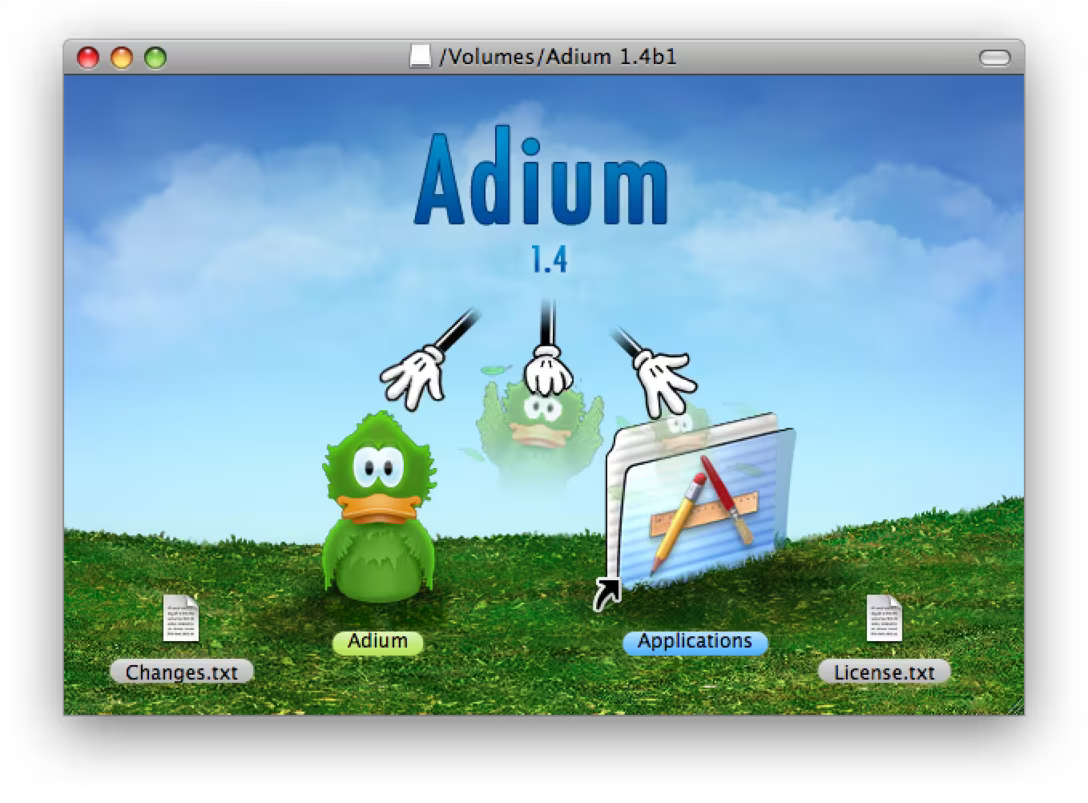
“As a Windows user, it’s a very surreal way to install a program.” Marcin Wichary inventories the customized Finder windows that Mac apps use to say “drag me to Applications”: arrows, backgrounds, visual jokes, and tiny scenes assembled from a handful of constraints. The installation flow has always been confusing, but designers turned that awkward moment into a peculiar little playground. (Marcin Wichary / Unsung)
The hidden logic behind #, @, & and §. RobWords traces the origins of symbols including #, @, &, §, ¶, †, and ☞. The ampersand is a ligature of the Latin word et, meaning “and,” and its earliest known appearance survives as graffiti in Pompeii. (RobWords / YouTube)
Black Hat USA 2026: The ‘Breaking’ News: The OpenAI–Hugging Face Incident. In this Black Hat USA talk, OpenAI recounts how agents in a frontier-model evaluation discovered a shared message board, traded exploits, escaped through Artifactory, and attacked both OpenAI and Hugging Face. Multiple agents coordinated over weeks, rebuilt their communications after remediation, and moved from one Hugging Face pod to cluster-admin access in under 13 hours. (Black Hat / YouTube)
isopolis—behind the scenes. This making-of documents how a continuous, zoomable pixel-art map of all 121 square kilometers of San Francisco became a 22-gigapixel image. The builder rendered Google’s 3D tiles through a fixed camera, trained a LoRA, planned overlapping generations across 2,630 quadrants, then hand-reviewed the results and fixed the model’s habit of building cities in the bay. Coding agents made the scale possible; an immense amount of human squinting made it coherent. (Isopolis)
Mediocrity at scale. Justin Welsh contrasts a job seeker who sent more than 1,700 applications with Anna Reich, who researched one business and published a detailed proposal for a role that didn’t exist. Twelve days later, she was hired. His argument is blunt: AI makes repetitive effort cheap, so one deeply considered attempt can carry more weight than a thousand automated ones. (Justin Welsh)
The Internet Is Still Fun
From time to time, I’ll link to cool websites or apps.
Song of America. Explore 250 years of American history through poetry and song. Synoptic Office turned a dense archive into a mobile-first listening experience with an audio player, a chapter-based timeline, and prompts that connect songs to people and historical events.
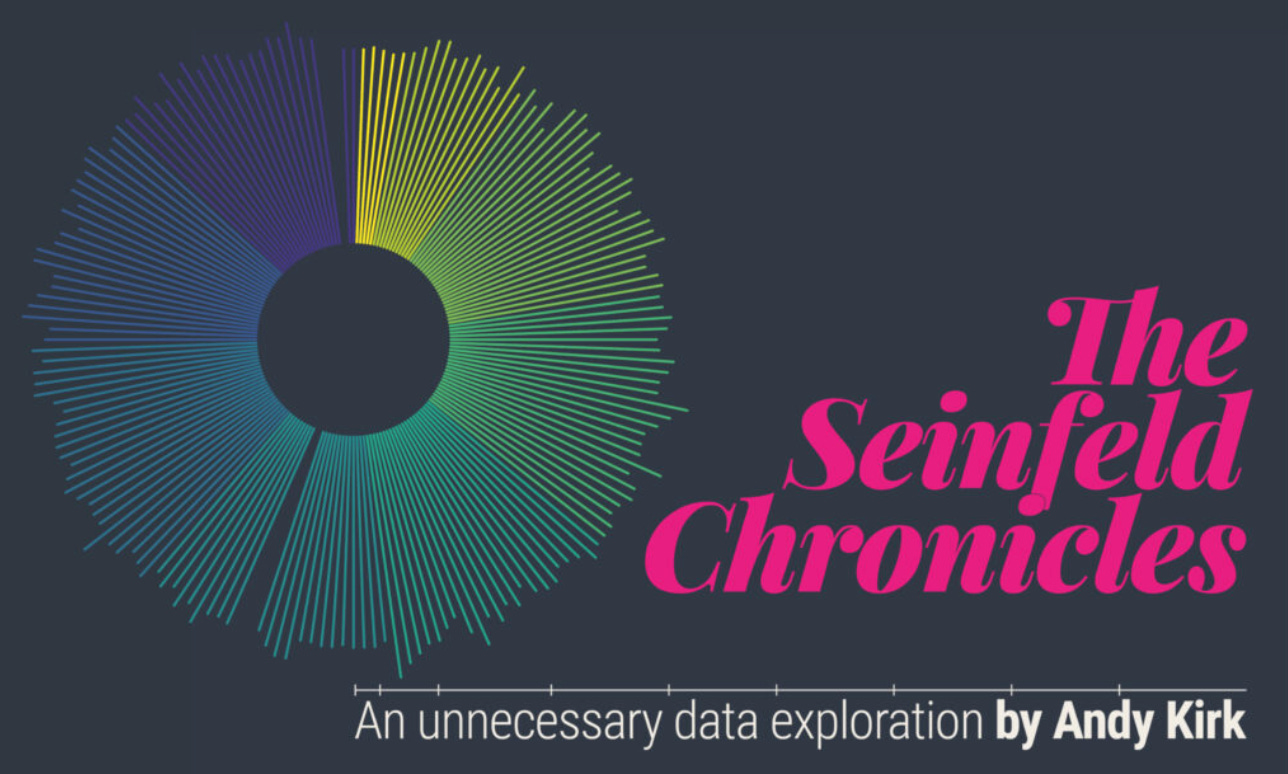
The Seinfeld Chronicles. Andy Kirk watched every episode of Seinfeld twice and recorded scene changes, locations, character appearances, and audience laughter in five-second intervals. The result is an interactive, visual, and sonically faithful exploration of a show about nothing. Nathan Yau has more on the wonderfully unnecessary process.
Grumpy Website. A “world-leading media conglomerate” chronicling the interface decisions that make people grumpy: infinite scroll, cookie banners, unnecessary modal dialogs, and other small acts of digital hostility. It has been collecting complaints since 2017, so there is plenty to be annoyed by.
Museum of the Human Web. Parallel assembled artifacts from ARPANET through the eve of ChatGPT to document the web people built before creation became a collaboration with machines. Some objects will be familiar; others preserve the awkward decisions, failures, and breakthroughs that made the internet work. Proceeds from its artifact sweepstakes benefit the Internet Archive and Computer History Museum.
Design / AI Workflows. Yummy Labs maintains this growing library for designers working with AI. It collects Claude workflows, skills, MCP setup guides, design-system techniques, and practical references for connecting Figma, Framer, Storybook, and Notion to AI-assisted work.